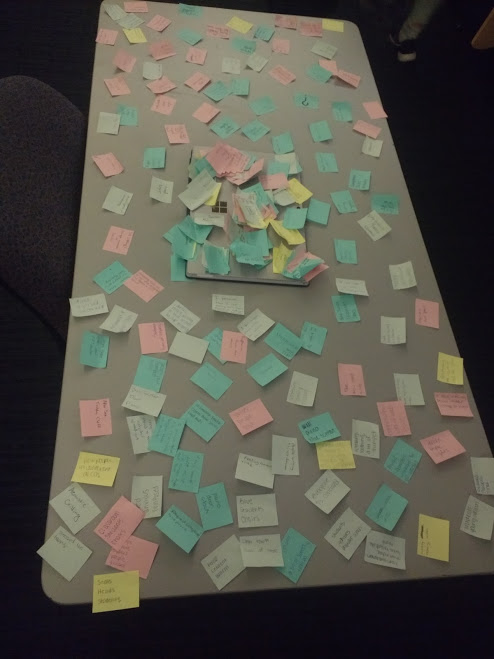
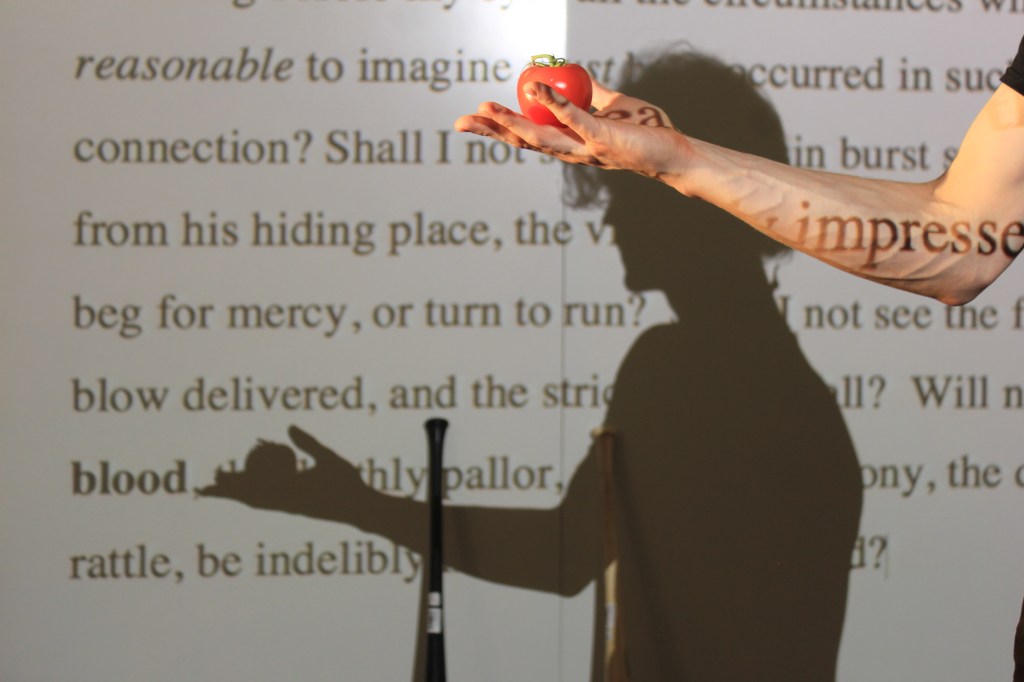
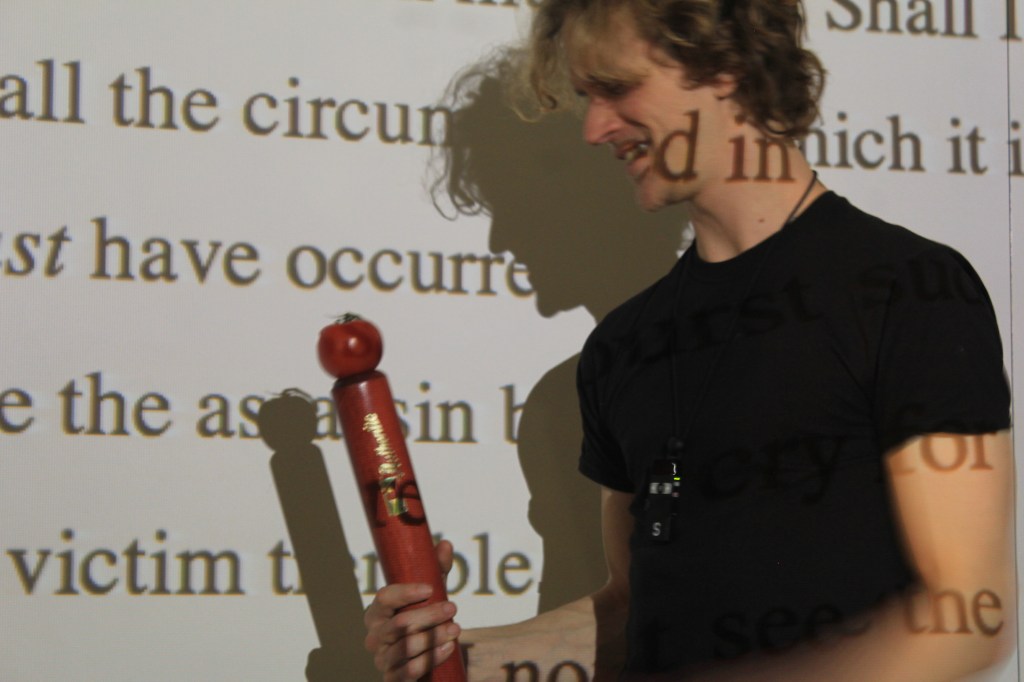
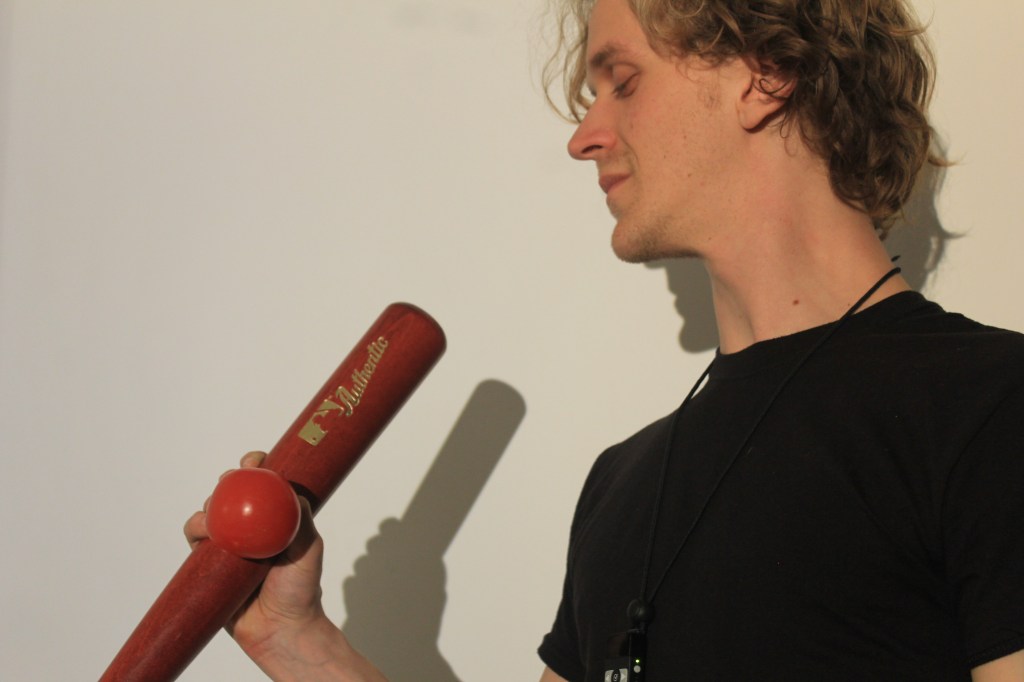
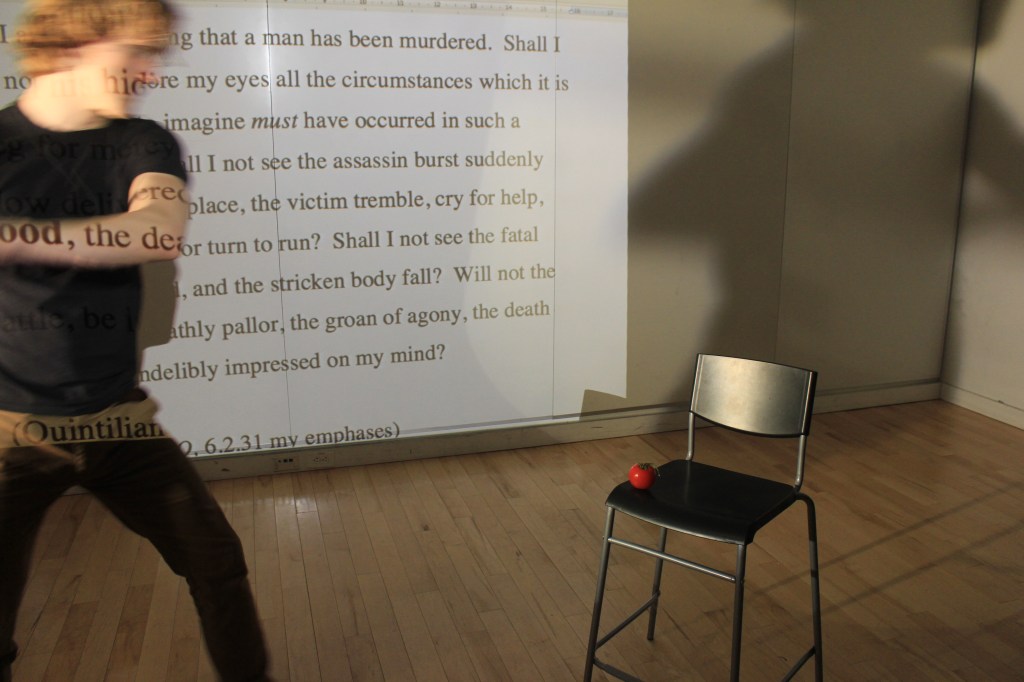
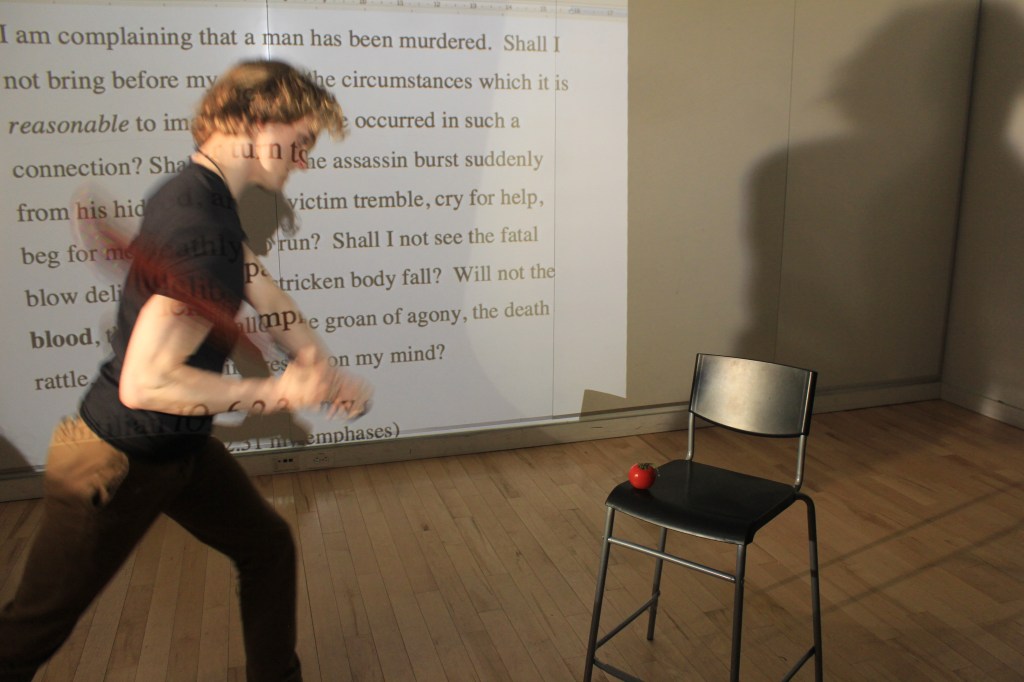
I tried to do a piece about ancient rhetoric in the modern world. It was about masculinity and baseball and good old fashioned murder. It was called frame{d}, and it was set to be a rip-roarin’ whodunnit, only the trick was that the murder never happened. It was a piece about probability and ancient rhetoric – the way that ekphrastic presentation slips into truth, because, after all, its right there before your eyes. Then a friend shared a link to the video of Eric Garner’s murder on the Guardian website, and I couldn’t make that piece anymore. The piece became a question: what does it mean for someone like me, someone who “presents” like me, to open that link? In a world of constant updates, push notifications, and personalized “feeds,” where is the line between the responsibility to bear witness, and the desire to consume?

Last spring, I started working on a piece called “frame{d}.” I’d been looking for ways to integrate my doctoral research and my performance practice, perhaps as a way to convince myself, gesture by gesture, that my reading on ancient rhetoricians and festivals for French kings might have some relevance to the present. After all, my work is all about presentation. I read about how French cities made books (“presentation copies”) to present the festivals they threw for French kings to present themselves as virtuous rulers. I write about the relation between ‘live’ art and the present life of documents. I struggle with how to present my research, how to present myself as a writer, as a reader, as a speaker and an academic, and as a teacher of self-presentation. I struggle with these things because some are difficult for me, but also because some come easy. I believe ethical understanding of the way one “presents” requires a constant attention to difficulties that one encounters, but also, an attunement to the difficulties that, through the privileges and violence of history, one doesn’t have to face. That I don’t have to face.
Working on “frame{d}” was easy until a friend “shared” a link to the video of Eric Garner’s murder by NYPD officers, posted on the Guardian website. All of the work I had done on the ambivalent “probability of the speaker” and the “invention of evidence” in Classical and Renaissance oratory seemed to be horrifically “present” across the layers of mediation that separated me from this scene, but which also served as frames to draw me in.
Cast in an ambivalent position between witness and consumer, I watched the piece change as well. What had been “frame{d},” a comical, exploratory piece, became “s{cr}eens.”
It is still an exploration, but now focused on the identity of the viewer, the speaker, the cameraman, the perpetrators. What screens determine the realm of visible violence, and what violence am I, or any spectator who “presents” like me, perpetrating in the act of “neutral” observation?
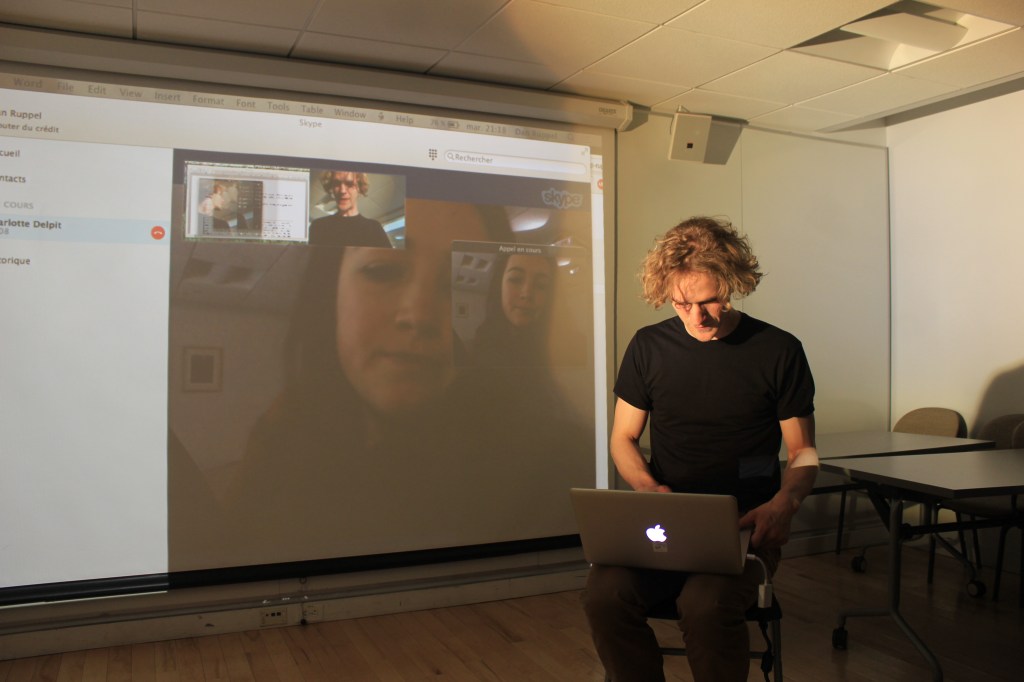
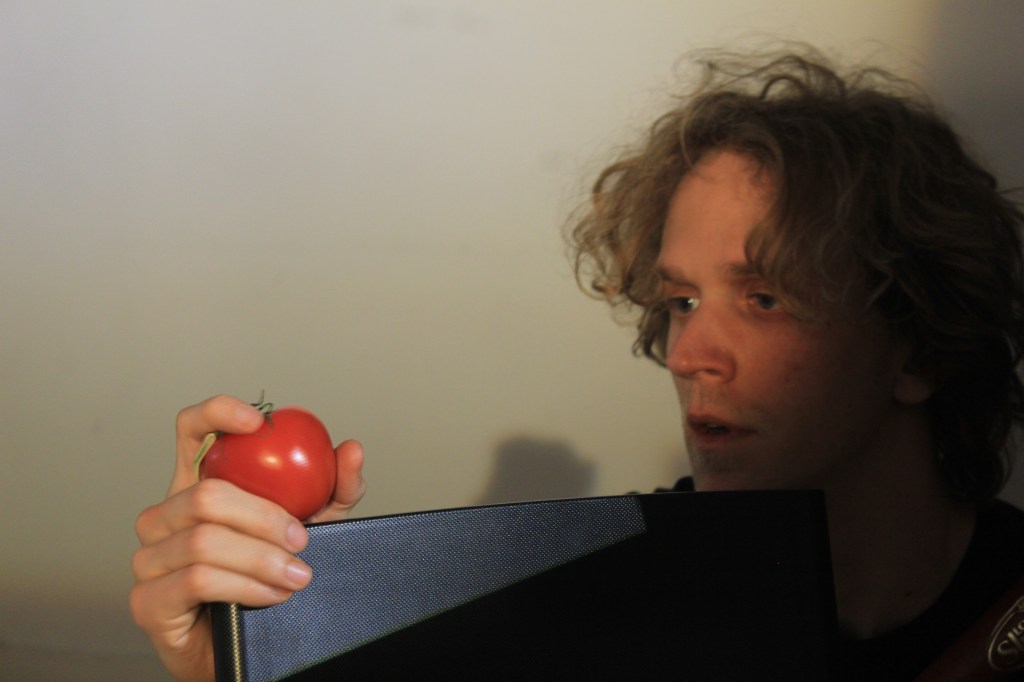
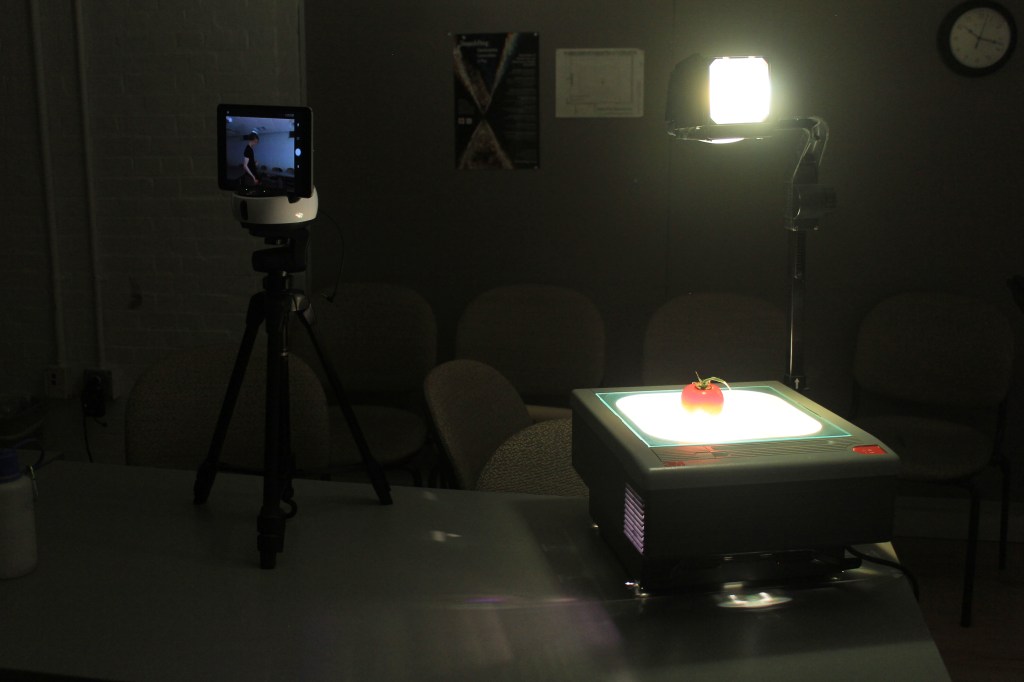
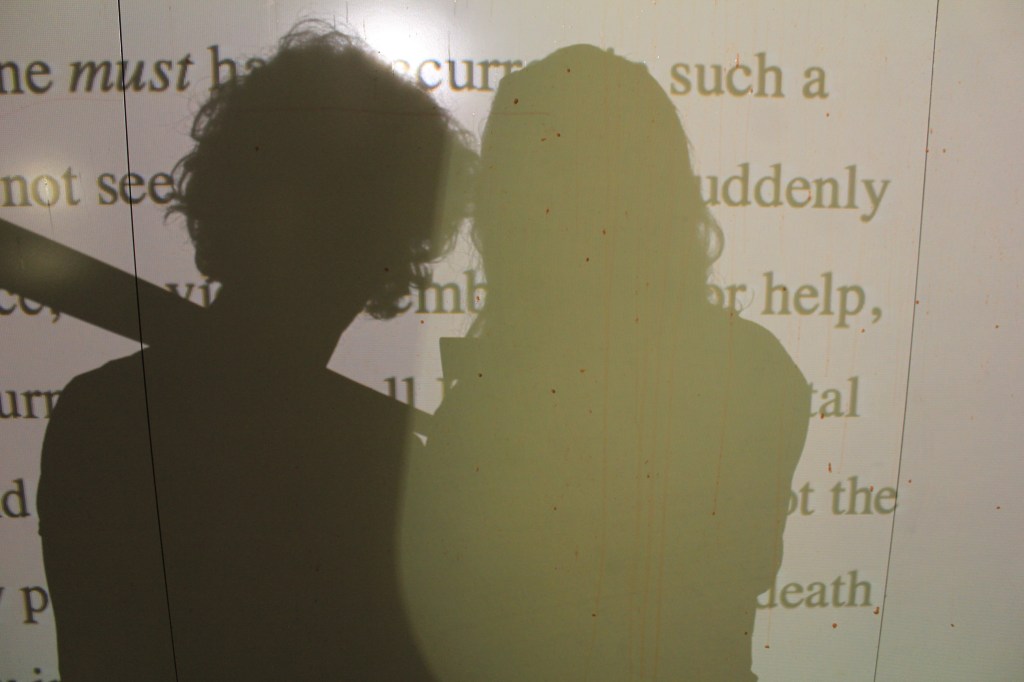
s{cr}eens was performed live and on the internet, through several layers of projections, in Providence, RI and Toronto, ON, as part of the Accidental Archives conference held by the graduate students at York University. The media equipment is the same that I use in my classes on “Persuasive Communication.”









 dan j ruppel